
The Wandsworth Boy: Who is Liam Rosenior?
Born in Wandsworth, just a stone’s throw from the Bridge, Rosenior will understand the “DNA” of West London because he lived it.
Rosenior is now a manager with a modern, analytical edge. As the son of former player and manager Leroy Rosenior, he was raised with a strong grounding in football and has stated previously that he’d engage in tactical debates with his father, from young. By the age of 11, he wasn’t just playing for his school team; he was leading their training sessions.
From the EFL to the European Stage
After a playing career as a full-back for the likes of Fulham and Hull City, he transitioned into coaching with an almost obsessive focus. He earned his UEFA Pro Licence at just 32 years old – one of the youngest to ever do so.
Whether it was stabilising Derby County during a financial crisis or guiding Hull City to an impressive 7th-place finish in the Championship, Rosenior proved he could coach to a decent level. But it was his stint at RC Strasbourg, Chelsea’s sister club under the BlueCo umbrella, that truly acted as his audition. In Ligue 1, he transformed the youngest squad in Europe into a top-seven side, securing European football for the first time in nearly two decades. He didn’t just win; he won with “the kids,” a prerequisite for anyone hoping to survive the current project at Stamford Bridge.
The “Human First” Manager
What separates Rosenior from the “tactical professors” is his emphasis on the human element. At Hull, he was known for replacing standard training sessions with Lego-building competitions to foster teamwork and trust.
“For me, the person comes before the football,” Rosenior has stated. “If you’re honest, if you have integrity and if you care about one another, I think you can go a really long way.” He is meticulous, and possesses a “superpower” of emotional intelligence. In a dressing room as young and scrutinised as Chelsea’s, a manager who focuses on “the joy of the game” could be the antidote to the anxiety we’ve seen lately.
Tactical Evolution
Next, it’s important to recognise how Rosenior’s tactics may differ from what we saw under Maresca. For the most part, we will see a similar base: a team that builds from the back, baits the press, and controls possession.
Out-of-possession the formation will look virtually identical to Maresca’s “4-2-3-1”:
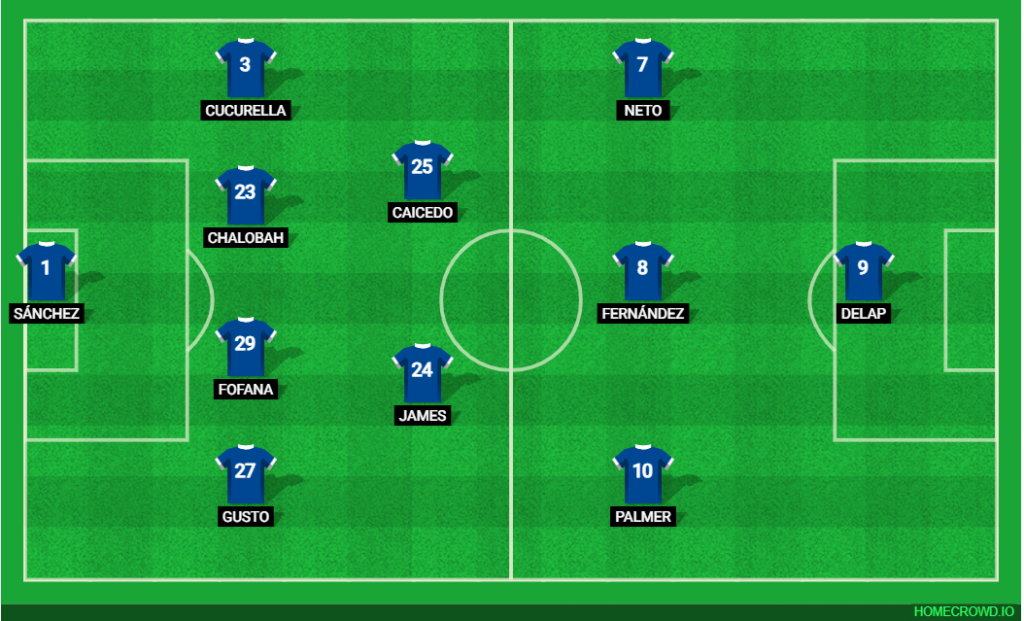
The real difference lies in Rosenior’s “possession with purpose.” He uses short passes to draw opponents in, only to suddenly change gears with incisive through-balls.
In-Possession Shifts
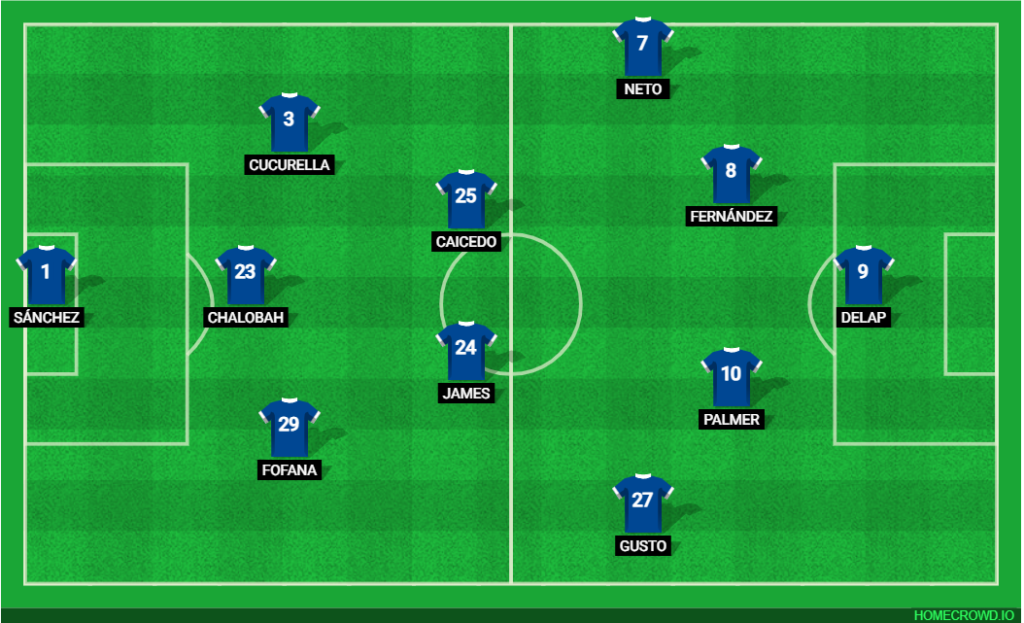
I expect the double pivot (Caicedo and James, for example) to remain relatively deep, forming a “3-2” base in the build-up. Unlike Maresca, where a full-back would always invert, Rosenior often gives the full-back (Gusto) license to bomb forward as a winger/wingback. This allows Cole Palmer to drift inside as a right-sided #10, with Enzo shifting to the left #10.
This system is fluid and interchangeable. The bottom line? Rosenior is a pragmatist. He will adapt his lineup to win the battle at hand and won’t stick to a rigid script.
Winners & Losers: How the Squad Shifts
With a change in philosophy comes a change in fortune for certain players.
The Winners
- Andrey Santos: We’ve all been underwhelmed by his lack of minutes since his amazing spell at Strasbourg. Rosenior is a huge fan and made Santos a centrepiece of his French side. Beyond tactics, the two share a close personal bond; Santos has spoken about how much support Rosenior gave him when his baby was born last year.
- Jorrel Hato: This system is tailor-made for Hato. Whether tucking in as a Left-Centre Back or bombing forward, he provides versatility. My view is that Cucurella’s recent dip in form is due to fatigue – something that could’ve been avoided with using Hato more often.
The Losers (or those who must adapt)
- Jamie Gittens: Gittens loves to cut inside and shoot, but Rosenior often asks his wide players to provide significant defensive cover. This “wing-back” responsibility is currently a weakness in Gittens’ game. However, I don’t believe Gittens is exclusively a left winger, we could see him start off the right, more often in the future. Time will tell.
- Joao Pedro: Despite a great Club World Cup, he has struggled in the Premier League. He isn’t quite technical enough to be a #10, a physical striker, or a pure winger. Rosenior may opt for a more specialist striker in Delap, more often that not, leaving Joao Pedro’s position in the starting lineup uncertain.
The Boardroom Diplomat: Navigating the Hierarchy
If Enzo Maresca was a tactical revolutionary who eventually burned his bridges, Liam Rosenior arrives as the ultimate diplomat. His relationship with Sporting Director Paul Winstanley dates back to Brighton, and his time at Strasbourg was a masterclass in corporate alignment.
Compliance as a Competitive Edge
One of the major flashpoints of the previous era was the “medical minutes” mandate. As I explored in my deep dive into the New Year’s Day fallout, the relationship between Maresca and the hierarchy collapsed because the Italian viewed data-led rotation as interference.
Rosenior’s outlook is different. He understands that in the modern Chelsea ecosystem, the Head Coach is one part of a five-man sporting team. He is unlikely to publicly demand veteran signings when the data points to a U21 prospect. He’s here to execute the model, not rewrite it.
The Success Paradox
The real test will come if Rosenior finds sustained success. In Chelsea’s history, trophies often breed a desire for autonomy. Rosenior’s biggest challenge will be maintaining this diplomatic balance even when his own stock is at an all-time high. For the project to work, the “Yes-Man” must become a “Partner” without forgetting the golden rule: the model is the star, not the coach.
Setting the Bar: Realistic Expectations for 2026
I’m not going to shift the bar from where I set it at the start of the season. We must build on our Club World Cup success. At a minimum, I expect:
- Champions League Qualification: Non-negotiable.
- Silverware: We are still in all competitions. With a massive League Cup Semi-Final against Arsenal on January 14th, the opportunity is immediate.
Conclusion: Apollo’s Verdict on the New Era
We shouldn’t expect a tactical revolution, but we should expect a cultural one. Rosenior was selected because he fits the recruitment brief, but his impact will be measured by his man-management. He isn’t just here to coach a system; he is here to nurture the elite young talents that have looked lost in recent weeks.
My expectations remain high. Changing managers halfway through a season is never ideal, but Apollo at the Bridge sees this as a necessary course correction. Let’s not forget who we are.
Up the Chels!

Apollo at the Bridge is an independent home for deep-rooted Chelsea analysis, applying a lens of truth and prophecy to the club’s evolving future. I provide tactical breakdowns and reflections for readers who want more than soundbites. Join the prophecy on X: @ApolloCFC